
English| EUR
Suggested for you
More currencies
Choose a language
Japan's relationship with samurai swords sits at the intersection of cultural heritage and strict weapons regulation. While the nation preserves its sword-making tradition as a protected craft, contemporary law draws precise boundaries around blade ownership and public possession. This guide clarifies what is permitted, what requires registration, and where visitors can legally experience authentic nihonto.
Quick answer
Samurai swords are not illegal in Japan, but ownership is tightly regulated under the Firearms and Swords Control Law. Blades longer than 15 centimeters require registration with local authorities, and antique swords must carry proper certification. Carrying any blade in public without legitimate reason is prohibited. Museums and cultural institutions hold special permits that allow visitors to handle registered swords during supervised demonstrations and lessons.
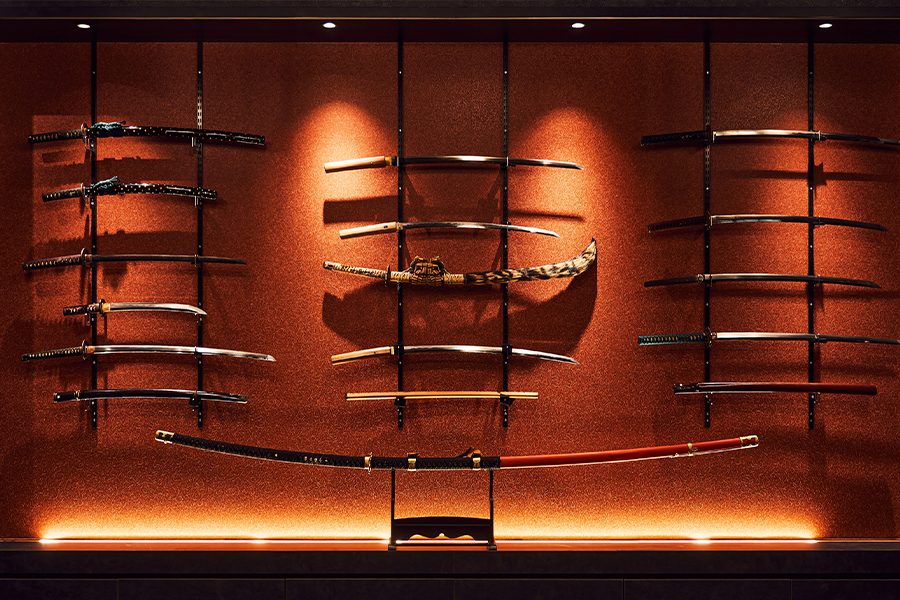
Japan produces fewer than three hundred traditionally forged katana each year, each one a registered cultural artifact before it leaves the workshop. The swordsmiths who make them hold licenses granted by the Agency for Cultural Affairs, and every blade over fifteen centimeters enters a national registry within twenty days of completion. Ownership transfers require documentation, and the absence of proper paperwork can result in confiscation and criminal penalties. The system reflects a deliberate cultural choice: swords are heritage objects first and personal property second. The legal framework distinguishes sharply between possession at home and carrying in public. A registered blade kept in a private residence is lawful; the same sword transported without wrapping, locked in a case, and accompanied by registration papers becomes an offense under Article 22 of the weapons control statute. Decorative replicas and blades shorter than the fifteen-centimeter threshold fall outside the registry requirement, but even these cannot be carried openly. The law makes no exception for collectors or martial artists during transport between home and dojo. Visitors asking are samurai swords illegal in Japan often discover that access is easier than ownership. Licensed museums operate under permits that allow supervised handling of registered blades during educational programs. At Samurai Museum Shinjuku, open daily from 10:00 to 19:00 at 5-17-13 Shinjuku, guided experiences include katana handling under instructor supervision, samurai armor fitting, and demonstrations of traditional swordsmanship techniques. The museum's collection comprises certified nihonto spanning four centuries of Japanese blade craft, each piece documented and insured for public interaction. Basic entry with guided tour and activities costs 3,000 yen, and arriving between 10:00 and 18:00 ensures full availability for the hour-long program. Understanding japanese sword laws opens a practical path: witnessing the craft without navigating the registration system. Museums curate access to blades that would otherwise remain in private collections or storage, and structured lessons provide the tactile education that legal restrictions make difficult to obtain independently. For anyone curious about the weight of a seventeenth-century tachi or the balance point of a Muromachi-period wakizashi, the supervised environment answers the question with the object itself rather than a photograph.
“Japan produces fewer than three hundred traditionally forged katana each year, each one a registered cultural artifact before it leaves the workshop.”
Common confusion regarding sword ownership often stems from a misunderstanding of Japanese firearm and sword control laws. Distinguishing between cultural property and prohibited weapons is essential for understanding current regulations.
MythAll samurai swords are illegal in Japan
FactAntique swords registered with the Board of Education are legal to own with proper documentation.
MythTourists can freely purchase and export samurai swords
FactPurchasing a sword requires strict adherence to legal export procedures and documentation, not just a simple store transaction.
MythModern replicas are treated the same as antiques
FactUnregistered modern blades or replicas lacking proper certification may violate the Swords and Firearms Control Law.
The Japanese sword emerged during the Heian period as a curved single-edged blade designed for mounted combat. By the Kamakura era, master smiths had refined differential hardening techniques that produced the distinctive hamon temper line, transforming functional weapons into objects valued for their aesthetic qualities. Swordsmiths signed their work, and noble families commissioned blades as heirlooms, establishing a tradition that linked craftsmanship to social status. The Tokugawa shogunate formalized sword ownership as a class privilege in the seventeenth century. Only samurai retained the legal right to carry daishō—the paired long and short swords that symbolized warrior identity. Commoners found in possession of blades faced severe penalties. This restriction encoded the weapon's role as both tool and status marker, embedding it deeply into feudal hierarchy. When the Meiji government abolished the samurai class in 1876 and issued the Haitorei edict prohibiting sword-bearing in public, thousands of historic blades entered private collections or were destroyed. Post-war Allied occupation authorities initially banned sword production entirely, fearing militaristic revival. By 1953, revised legislation reclassified antique and traditionally forged swords as cultural property rather than weapons, requiring each blade to undergo inspection and registration with local authorities. The shift from asking are samurai swords illegal in Japan to recognizing them as protected art objects reflected a broader effort to preserve tangible heritage while dismantling martial symbolism. Today, the National Agency for Cultural Affairs oversees the designation of swordsmiths as Living National Treasures, and the registration system ensures legal clarity for collectors and museums. Visitors to the Samurai Museum Shinjuku encounter blades spanning four centuries, each bearing the authentication seals and registration documentation that permit public display. The collection illustrates how legal frameworks transformed swords from restricted weapons into artifacts of material culture, allowing modern audiences to study metallurgy, aesthetics, and social history through objects that once defined an entire class.
Heian-period swordsmiths develop the curved tachi blade optimized for cavalry warfare.
Kamakura smiths perfect differential tempering, creating blades prized for both function and beauty.
Toyotomi Hideyoshi's sword hunt confiscates weapons from peasants, consolidating blade ownership among the warrior class.
The Meiji government issues the Haitorei edict, prohibiting samurai from wearing swords in public and effectively ending the warrior tradition.
Allied occupation bans sword production; revised laws in 1953 reclassify traditional blades as cultural property requiring registration.
The Agency for Cultural Affairs establishes a registry system and designates master swordsmiths as Living National Treasures, preserving the craft under legal protection.
The museum operates on a consistent schedule throughout the week to accommodate visitors seeking information on Japanese sword culture.
The Samurai Museum is located at 5-17-13 Shinjuku, Shinjuku City. The most efficient way to reach the facility is by utilizing the extensive Tokyo train and metro network to arrive at Shinjuku Station.
JR Yamanote Line to Shinjuku Station
Tokyo Metro Marunouchi Line to Shinjuku-sanchome Station
From Shinjuku-sanchome Station exit E1
Plan your arrival within the 10:00–18:00 window to ensure sufficient time for the hour-long guided experience and to avoid potential evening sell-outs.
To ensure a comprehensive experience and avoid potential sell-outs, the best arrival window is between 10:00 and 18:00. This timeframe allows sufficient duration for the hour-long guided experience.
—
Mid-week visits offer a quieter atmosphere for learning about sword history and regulations.
Mild temperatures 15-22°C
Pleasant weather makes navigating Shinjuku and surrounding areas comfortable before your scheduled session.
Hot and humid 25-33°C
The museum remains a climate-controlled environment, but nearby travel can be demanding during peak humidity.
—
Expect longer wait times; arriving early in the day is advised to secure your spot for the guided tour.
Verdict: The optimal time for your visit is Tuesday to Thursday between 10:00 and 12:00 during the months of April or October.
Everything you need to know about are samurai swords illegal in japan
Possessing a traditional blade is strictly regulated under the Swords and Firearms Control Law, meaning that while are samurai swords illegal in japan for general public carry, ownership of registered antique or art swords is legal for licensed individuals. When visitors ask are samurai swords illegal in japan, the answer depends on intent and registration, though replica swords or iaito used for training are generally permissible under controlled conditions. You cannot carry a real katana in public spaces as are samurai swords illegal in japan if they are not properly registered with the authorities. No special permission is required to visit the Samurai Museum Shinjuku, as the venue operates legally to provide guided tours and educational experiences about Japanese history. The museum offers a professional environment to appreciate craftsmanship, serving as a hub for those interested in the cultural significance of the katana. When considering are samurai swords illegal in japan, always remember that local regulations prioritize public safety, and authentic blades must be accompanied by a registration certificate issued by the Board of Education.